
The GAP Index
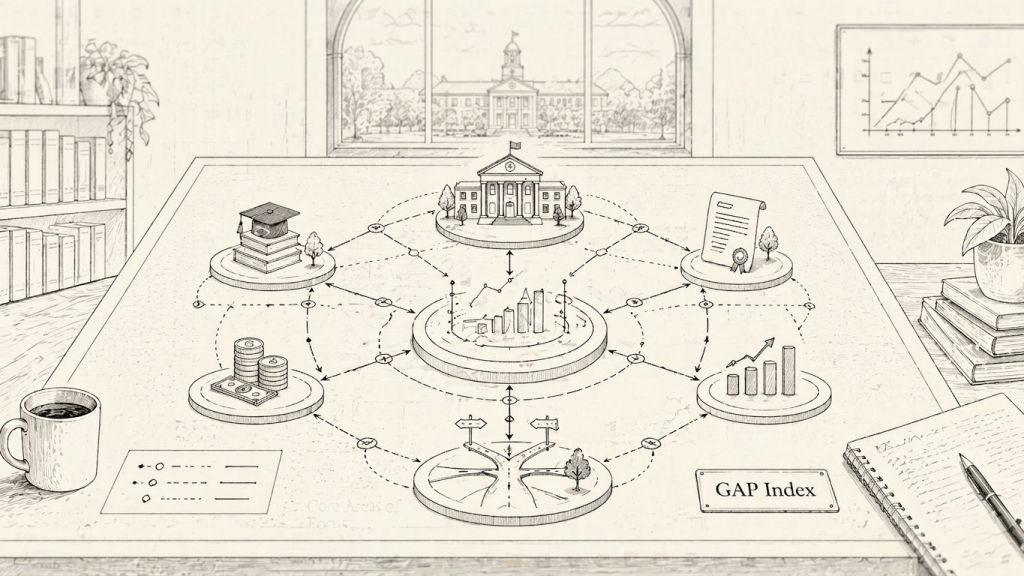
The GAP Index is a practical framework developed to help identify where changing federal lending limits may create meaningful financing pressure for graduate and professional programs. At its core, the work is meant to help institutions and aligned organizations better understand where pressure may emerge, how significant it may be, and where the implications may become more strategic.
The Index grew out of a simple but increasingly important question: where are new federal loan limits most likely to matter, and what will that mean for institutions in practice? That question quickly led to a broader view of the challenge—one that reaches beyond exposure alone into institutional economics, market response, and the strategic choices colleges and universities may need to evaluate.
More broadly, the GAP Index reflects the larger approach behind Campus Access Partners: combining policy fluency, financial judgment, and practical institutional understanding to help clients think clearly about changing conditions and what may come next. The goal is not just to describe a problem, but to clarify where real decision points may be emerging.
Coming Soon: Additional details on the GAP Index, its underlying framework, and how this work may support institutions and aligned organizations navigating the next phase of change.
 Campus Access Partners