
Private education loan classification
Private education loan is a regulatory classification based on the transaction, not the identity of a commercial lender. Regulation Z generally looks to closed-end consumer credit, outside Title IV, extended expressly in whole or in part for postsecondary educational expenses, subject to stated exclusions. A college or other institution can be the creditor when its transaction meets the definition.
Federal authorization alone does not exempt a loan from the private education loan rules. Public Health Service Act school-based loans arise outside Title IV and can meet the Regulation Z definition. The relevant cost-of-attendance and institution definitions connect the federal credit rule to the education setting.
Institutional balances, plans, and loans
An unpaid institutional balance is not automatically an extension of credit. A school’s agreement to defer payment or accept installments can create credit, but Regulation Z treatment depends on the transaction terms and exclusions. A loan of 90 days or less by a covered educational institution and an interest-free billing plan of one year or less receive specialized exclusions from the private education loan definition, while ordinary closed-end disclosures can still be relevant. Longer institutional financing may enter the full private education loan framework.
| Arrangement | Regulation Z question |
|---|---|
| Unpaid receivable | Was credit actually extended? |
| Short-term institutional loan | Is the 90-day specialized exclusion available, and do ordinary closed-end rules apply? |
| Interest-free billing plan | Does the one-year specialized exclusion apply? |
| Longer education loan | Does it satisfy the private education loan definition and Subpart F? |
Scroll horizontally to view all table columns.
What the private education loan disclosures look like
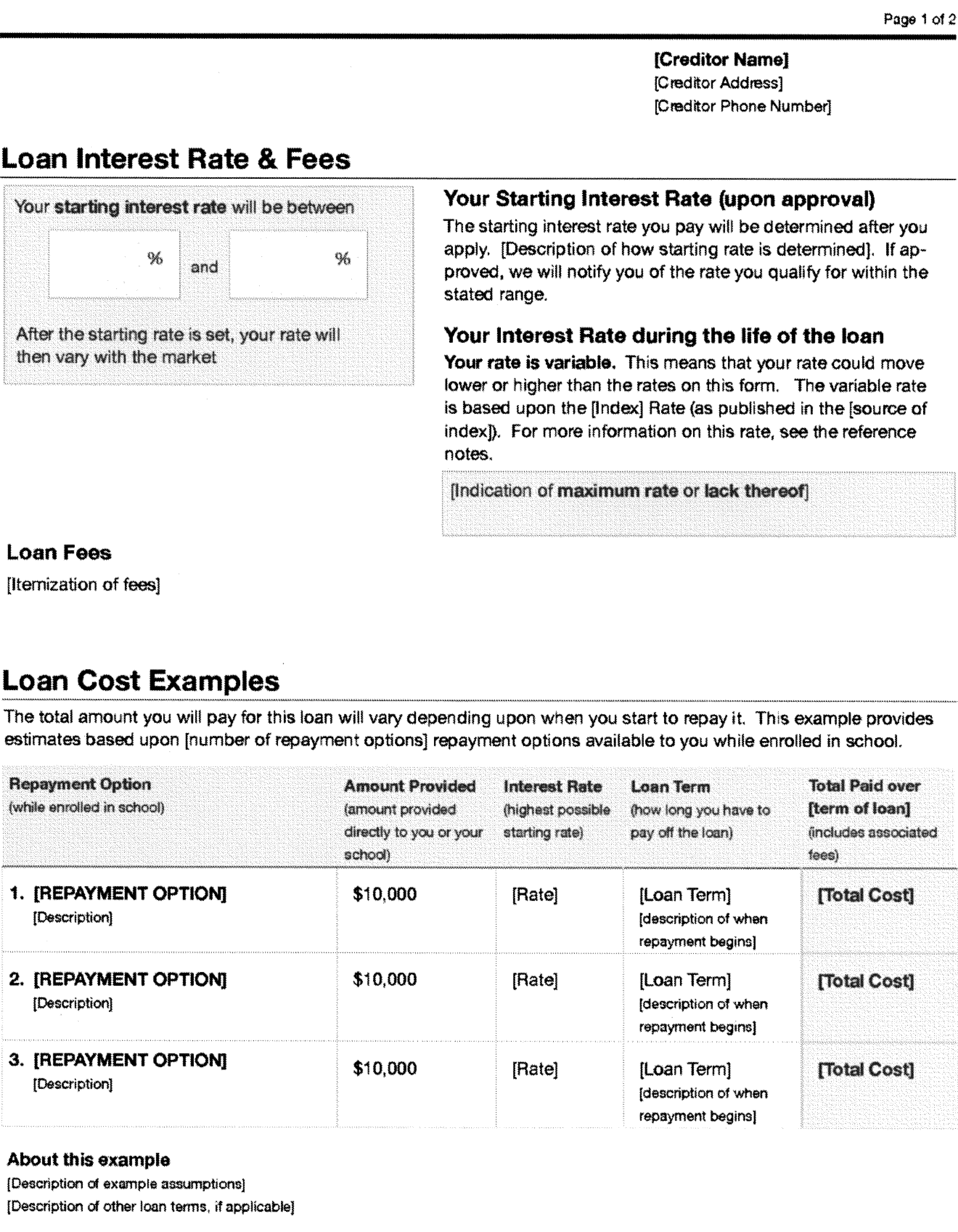
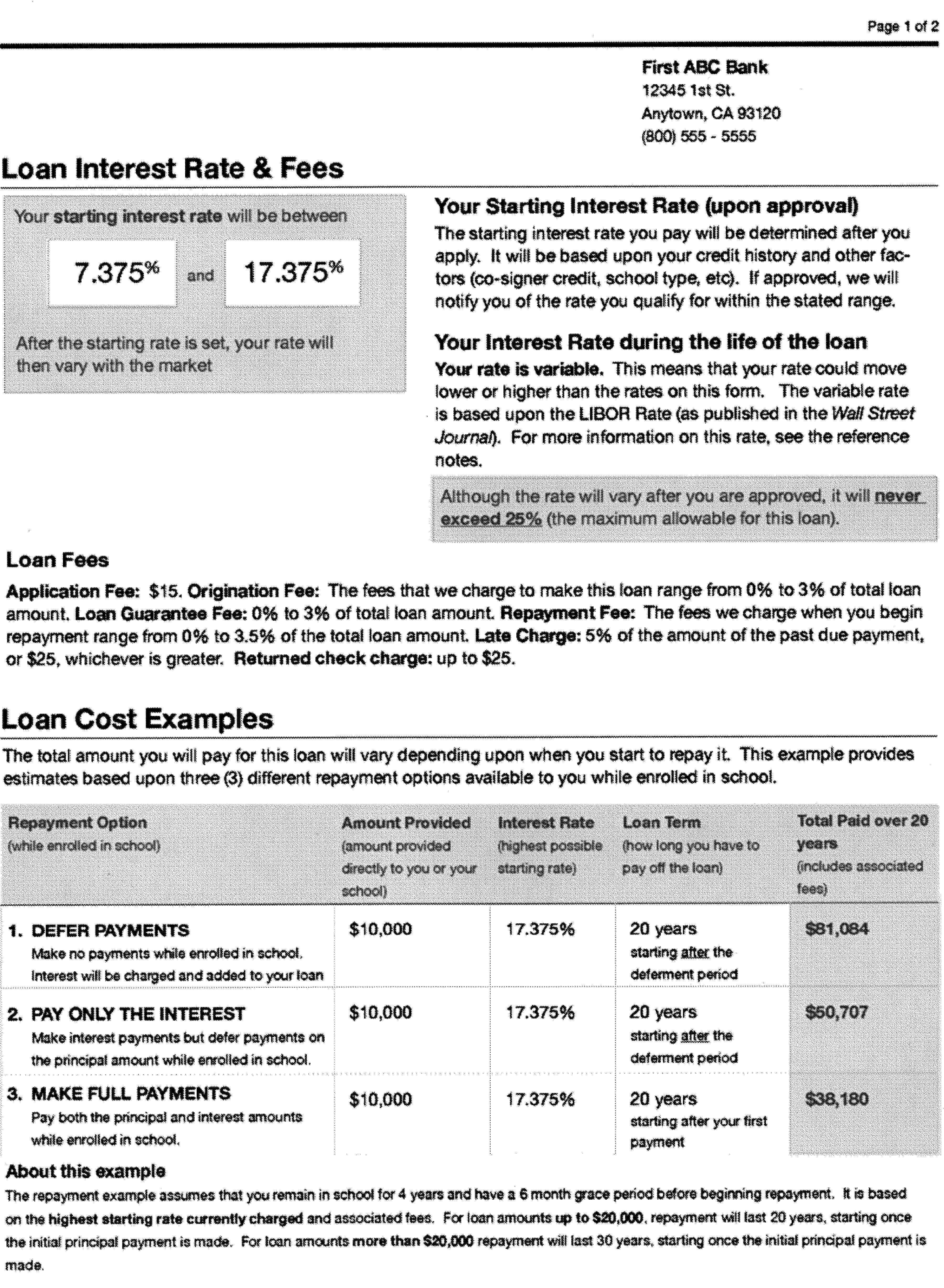
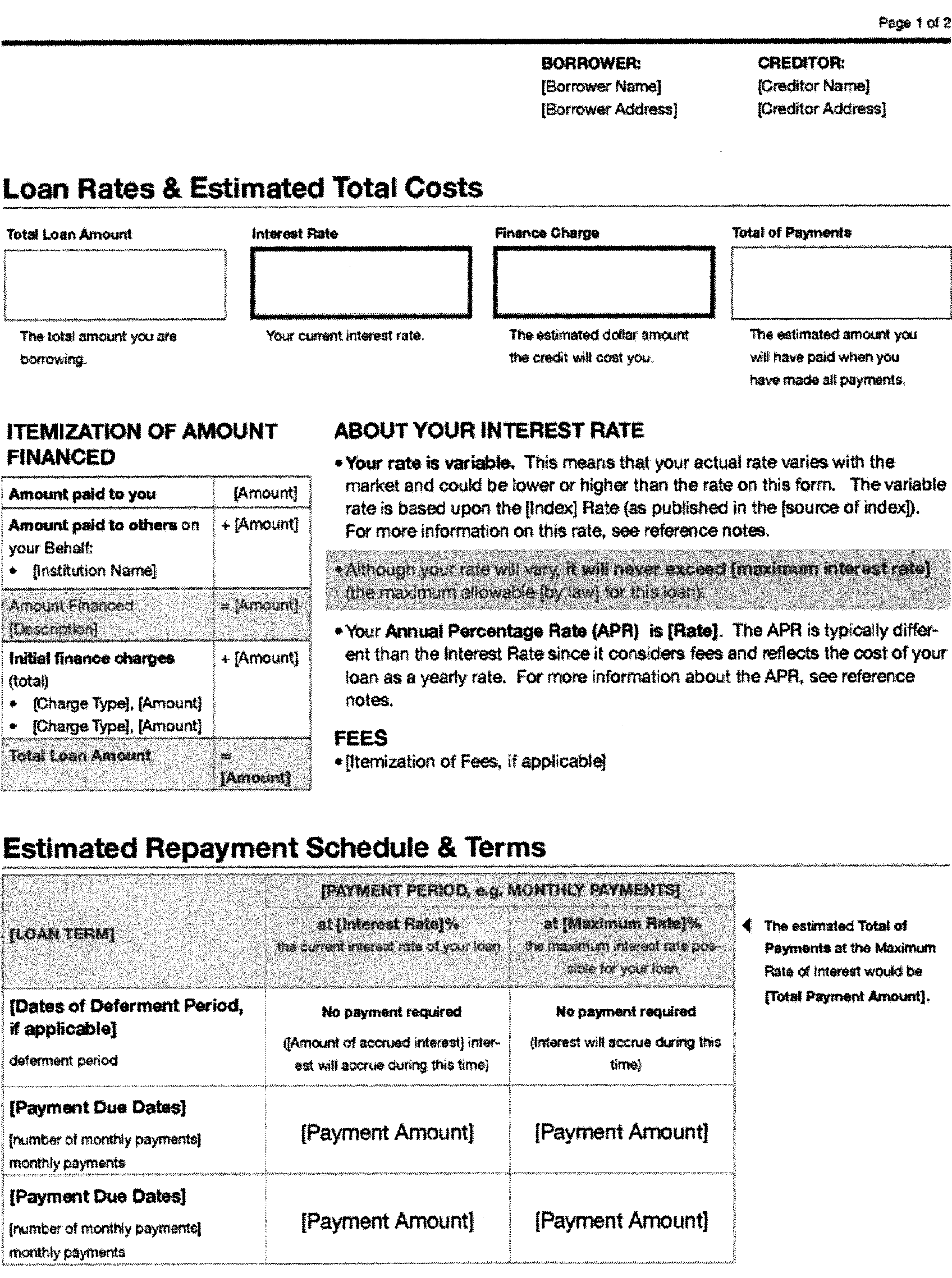
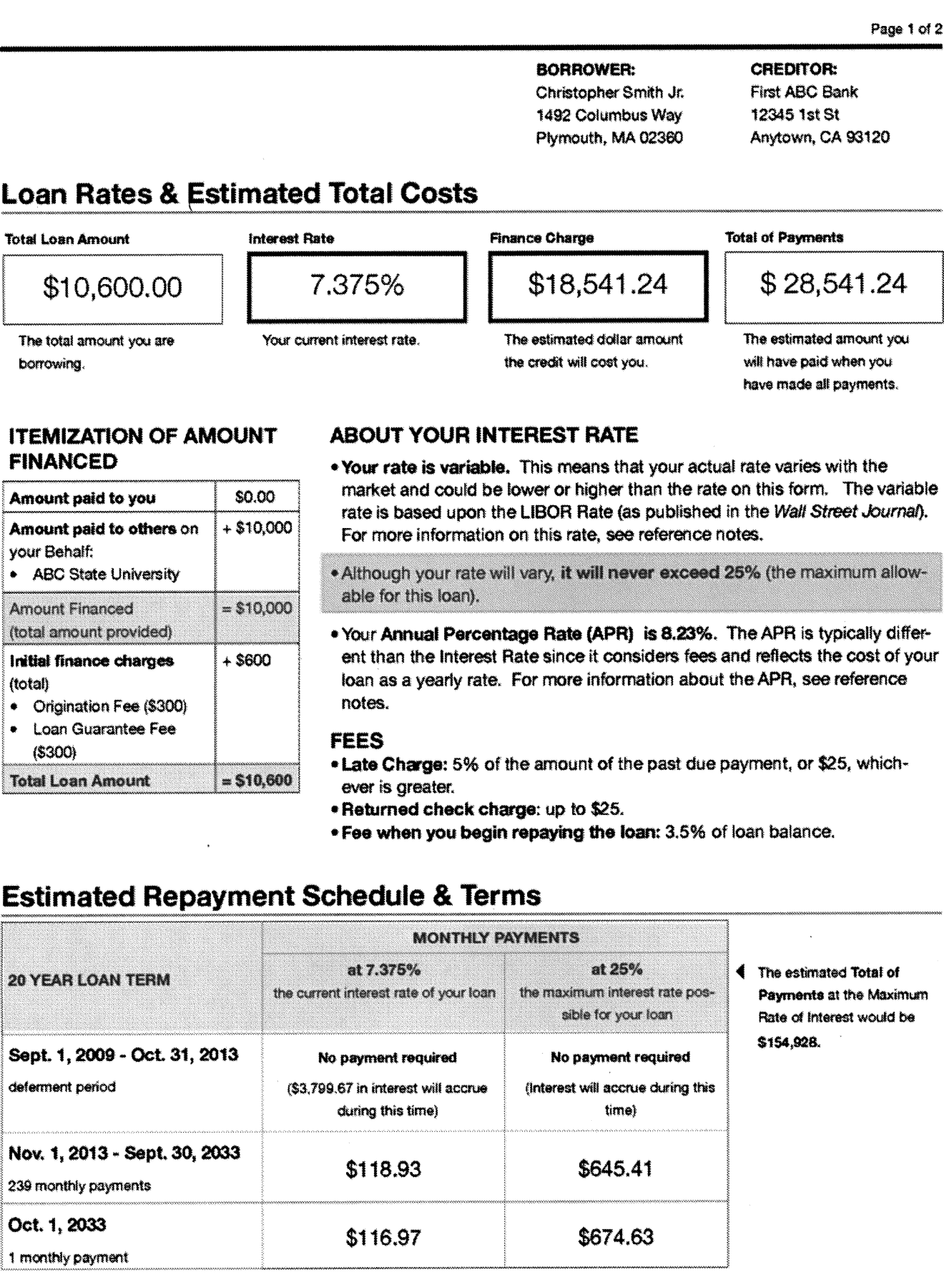
Regulation Z organizes private education loan disclosures into three stages: application or solicitation, approval, and final disclosures after acceptance. The application stage presents ranges and options; the approval stage presents the terms offered to the borrower; the final stage records accepted terms and the cancellation right. Section 1026.47 supplies the required content for each stage, and § 1026.48 supplies timing and related limitations.
Appendix H contains three model forms, H-18 through H-20, and three completed samples, H-21 through H-23. The model forms illustrate the required disclosures; proper use receives the regulatory treatment described in the official Appendix H commentary. The samples show one possible completed presentation. The links below open the official CFPB form images; the full Appendix H provides accompanying instructions and multi-page context.
| Stage | Regulation Z authority | Model form | Completed sample |
|---|---|---|---|
| Application / solicitation | § 1026.47(a) | H-18 model | H-21 sample |
| Approval | § 1026.47(b) | H-19 model | H-22 sample |
| Final / acceptance | § 1026.47(c) | H-20 model | H-23 sample |
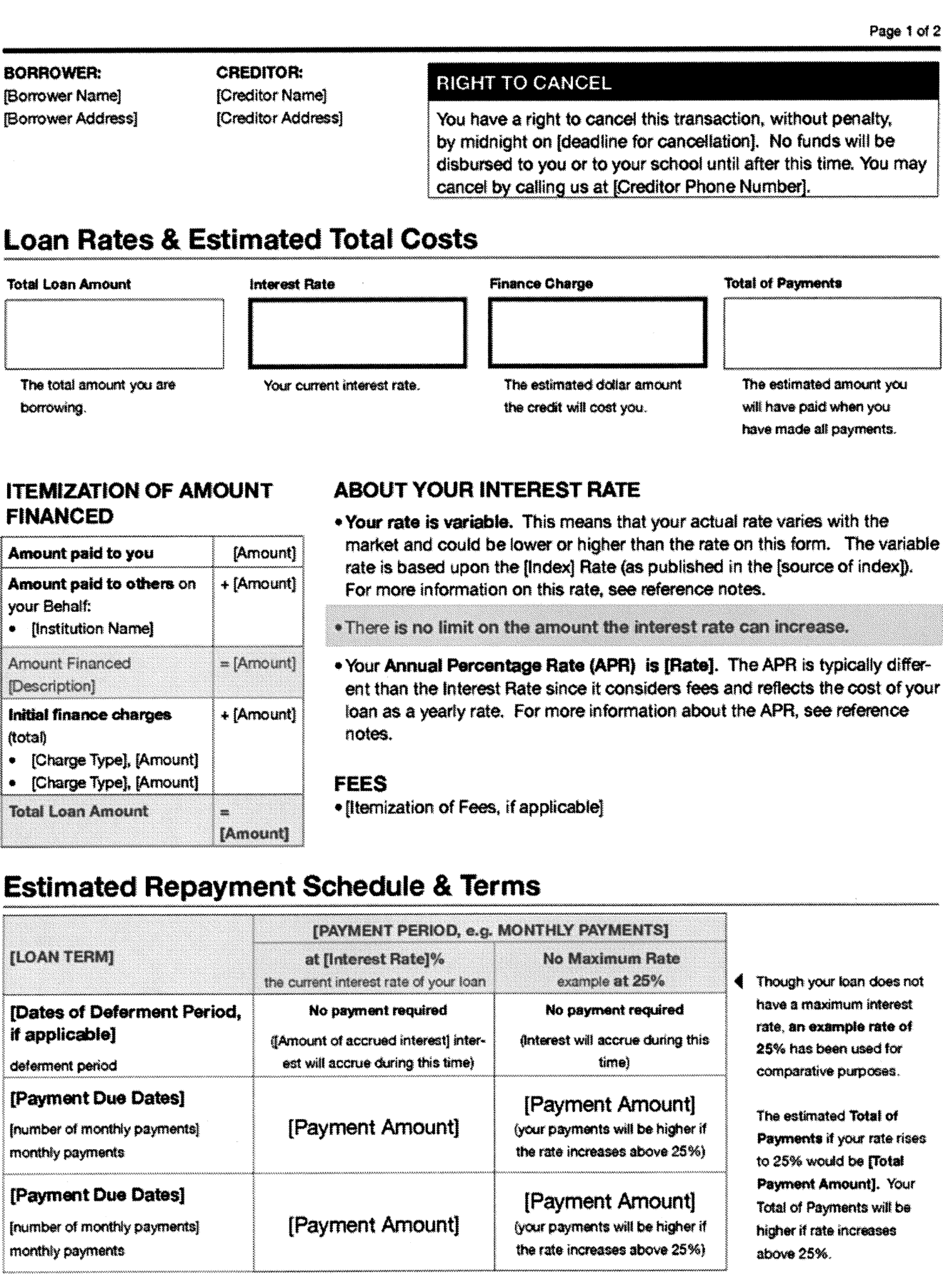
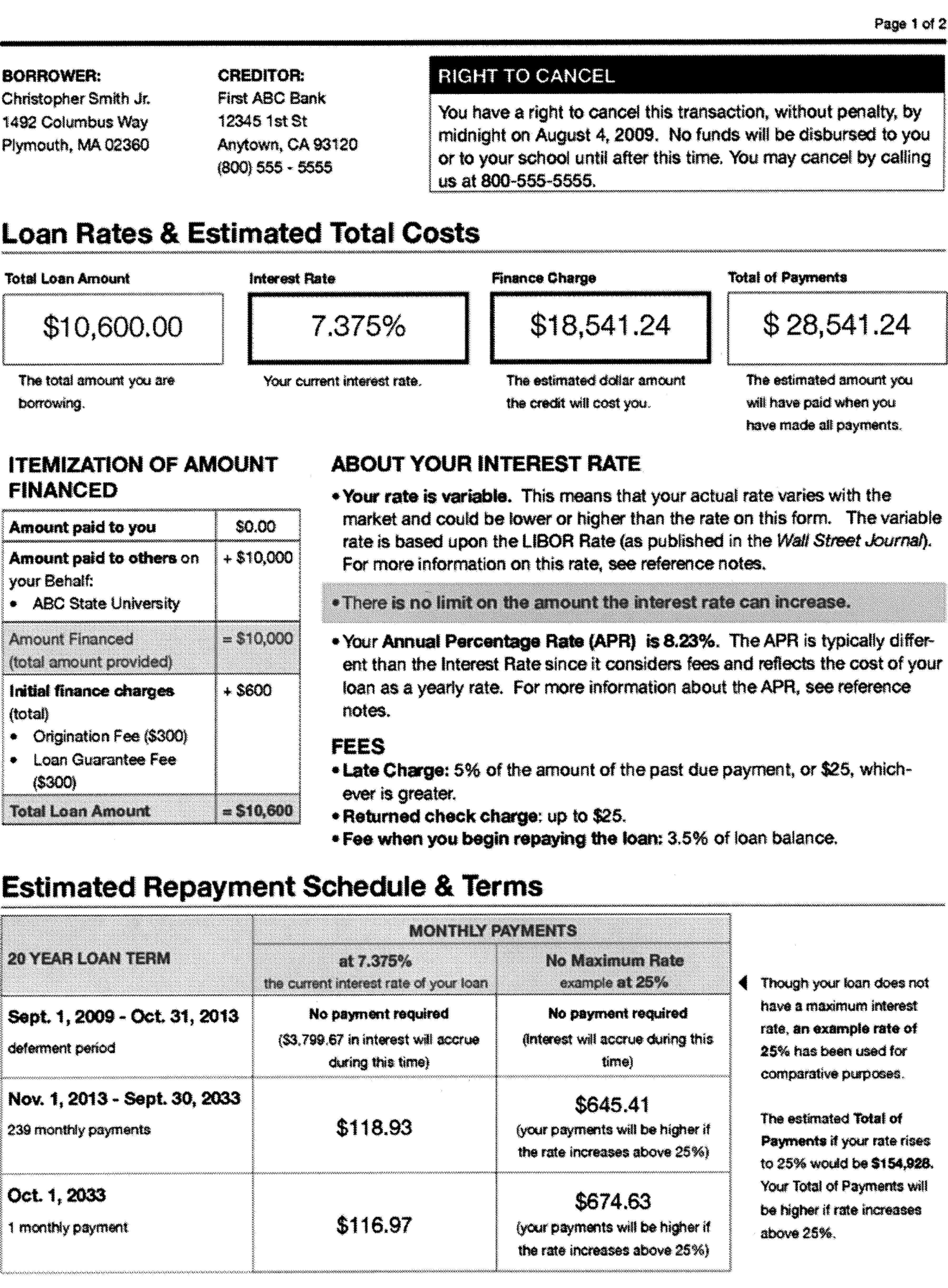
Scroll horizontally to view all table columns.
Official examples & tools
- CFPB Regulation Z Appendix H, forms H-18–H-23The official appendix includes every model and completed sample, with interpretive instructions.
Acceptance, cancellation, and self-certification
After approval disclosures, a consumer generally has at least 30 calendar days to accept the offered loan. Following final disclosures, the cancellation right generally continues until midnight of the third business day after receipt, and funds may not be disbursed before that period expires. The framework also requires a borrower self-certification form when applicable, connecting the credit amount to educational costs and other aid.
Additional Provisions: Co-Signers and School-Lender Relationships
TILA restricts acceleration of a private education loan solely because a cosigner dies or enters bankruptcy and requires release of a cosigner after the student borrower’s death. Regulation Z also addresses prohibited co-branding in private education loan marketing. HEA Part 601 preferred lender requirements can govern a defined school-lender arrangement separately; the existence of an institutional relationship alone does not establish that classification.
Other credit and delivery rules
General closed-end credit disclosures may accompany the specialized private education loan requirements. ECOA and Regulation B govern nondiscrimination in the credit relationship; E-SIGN can govern electronic consent and delivery without changing the content required by TILA. The Holder Rule and FTC Credit Practices Rule address different contract and cosigner questions when their own coverage elements are met.
Federal and state law
Regulation Z generally preempts inconsistent state disclosure requirements, not all state regulation of education credit. A state provision does not become inconsistent merely because it provides additional information, and defined classes of transactions can qualify for federal exemption where state law is substantially similar and adequately enforced.